Monday, June 25, 2018

Investing in Overseas Market

URL: https://dollarsandsense.sg/singaporeans-can-start-investing-overseas-stocks-looking-companies-around-us/ 

This article was written in collaboration with OCBC Securities. All views expressed in this article are the independent opinion of DollarsAndSense.sg
Investing in overseas stocks may be intimidating to new investors. Even for those of us who have already started investing in companies listed on the Singapore Exchange (SGX), we may still feel that foreign-listed stocks require us to venture beyond our comfort zone.
To overcome our inertia to foreign investments, we need to turn this from an unknown quantity into a known one. The easiest way to do so is to simply observe the world around us.

Investing In The World Around Us

Each morning, we wake up from our Sealy Posturepedic (Sealy International, Inc.) beds wishing we could spend just five more minutes sleeping. After washing up, we rush to catch the perennially packed bus.
On our way to work, we’re already Googling (Alphabet Inc) our next holiday ideas on our iPhones (Apple Inc.). We look out the window just in time to see a shiny new Volvo (Geely Automobile) zoom past the bus…maybe we should save up for a car so we don’t have to squeeze with everyone every morning.
During lunch, we go to McDonald’s (McDonald’s Corporation), even upsizing our fries and Coca Cola (The Coca Cola Co). In our minds, we promise to finally go for that run later in the evening with our new pair of Nike (Nike Inc) trainers.
While eating, we revel about how epic the upcoming Marvel (Walt Disney Co) universe movie Ant Man is going to be. Instead, our colleagues seem more interested in finding the best deals on Taobao (Alibaba Group) and Amazon (Amazon.com, Inc.).
By midday, most of us start nodding off at our desk. Saving our work on Dropbox (Dropbox Inc), we head out for our daily Starbucks (Starbucks Corporation) fix. Flashing our new HSBC (HSBC Holdings) credit card on the Visa payWave (Visa Inc) machine certainly made it feel like an easier transaction.
Returning home from work, we eagerly await tuning into Netflix (Netflix, Inc.) or logging on to our gaming laptop, the Lenovo Legion (Lenovo Group) to play our favourite first-person shooter game. All that will have to wait for now – we’re going to watch the FIFA World Cup on our big screen Sony (Sony Corp) television set!
After celebrating our favourite team’s performance, we brush our teeth with the Advanced Whitening Colgate (Colgate-Palmolive Company) and tuck into bed. Before we doze off for the night, we log on to Facebook (Facebook, Inc.), WeChat (Tencent Holdings) and Snapchat (Snap Inc) to see what our friends have been up to.
If you haven’t caught on, this typical routine many of us live on a daily basis sees us interacting with some of the largest blue-chip or most exciting foreign-listed companies globally.

Starting Our Overseas Investment Journey

Compared to the market capitalisation of SGX, the New York Stock Exchange (NYSE) is close to 30 times larger with over 2,400 listed companies, the London Stock Exchange (LSE) is nearly six times larger with 2,500 listed companies and the Hong Kong Stock Exchange (HKEX) is five times larger with nearly 2,500 listed companies.
When you couple this with the fact that the companies that we engage with on a daily basis are also the ones listed on many of these overseas stock exchanges, it doesn’t feel as daunting to start investing in overseas stocks.
Moreover, these are also the companies that are likely to be the most highly-traded and researched companies. This provides us with both liquidity and extensive information to make our investment decisions.
It’s also fair to assume that if we frequently purchase products and services from a certain brand, we would be even more keen to put in extra research to better understand the company. This allows us to become savvier consumers as well as puts us in a better position to ascertain the company’s investment merits.
We’ll be more aware of a company’s competitors as well as be in-tuned to any technological advancements or pain points in the industry. This helps us gauge a company’s current operational strength and long-term business viability. It also smoothens the process of monitoring and rebalancing your portfolio as an investor.
Rather than to look at it as a hurdle, we should view overseas investments as essential to diversifying and strengthening our investment portfolio with highly-traded multinational blue-chip companies.

Which Stock Brokerage Account Should I Use?

This is an important question, as choosing the right brokerage platform can help an investor significantly in his or her overseas investment journey.
Here are some relevant questions that you should be asking to determine this.
Local VS Foreign Stock Brokerage House?
While it’s possible to open a brokerage account in the overseas market that you wish to invest in, you should first consider choosing a local brokerage platform.
The main reason is convenience. If you already have a stock brokerage account with a local brokerage house, it’s simpler to continue using them for your overseas investments. Even if you start off by investing in overseas stocks, it’s likely that you will invest in local stocks at some point in the future.
By using a local brokerage account, you gain access to both overseas and local stock exchangeson a single brokerage platform. This way, you buy and sell stocks on the same platform, you also pay for your investments the same way, and you get to monitor your entire portfolio on one app, regardless of whether it’s a local or foreign stock.
Access To Multiple Overseas Markets
If you are intending to invest in overseas stocks, you want to choose a brokerage account that provides you access to multiple markets, not just one.
For example, OCBC Securities  enables customers to trade on 15 global exchanges — including the NYSE and Nasdaq in the US, the HKEX in Hong Kong and the Bursa Malaysia – just as easily as they would for Singapore-listed stocks on its iOCBC online platform and mobile app. Customers can gain access to even more global exchanges by calling their OCBC Securities Trading Representative.

Wednesday, May 23, 2018

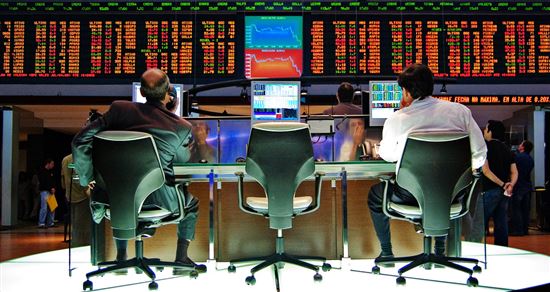
Average return on Stock Market

The S&P 500 provides an average 10% return. The stock market provides an average 7% return. Does this mean you'll walk away with large profits?
A 10% return on your investment would be a great way to stay financially stable. However, it's not always reality. The 10% reflects the average over time, as you ride out the highs and lows.
Read this shocking report to learn the average returns on some of the most popular investments today.
© RAFAEL MATSUNAGA (CC BY 2.0) VIA FLICKR

STOCK MARKET RETURNS OVER TIME

  1. What is the average stock market return since its inception?
    The average stock market return is around 7%. This takes into account the periods of highs, such as the 1950s, when returns were as much as 16%. It also takes into account the negative 3% returns in the 2000s.
  2. What is the average stock market return over the last 10 years?
    The last decade provided an average return of 6.88% in the stock market. The lower return takes into account the tremendous loss the market took in 2008.
  3. What is the average stock market return over the last 50 years?
    Over the last 50 years, the stock market saw an average return of 10.09%.
  4. What is the average investor's return on mutual funds?
    The average investor greatly underperforms the stock market. Over the last 30 years, the average investor saw a return of 3.66%, whereas the S&P 500 had an average return of 6.73%.
  5. What is the average rate of return on retirement investments?
    According to Vanguard, over the next 10 years, investors can expect a 6.6% return on stocks in their retirement account. They can also anticipate a 3.1% return on bonds in their portfolio.
  6. What is the average rate of return on mutual funds?
    Mutual funds mimicking the S&P 500 make an average of 7-9% return.
  7. What is the average rate of return on bonds?
    Bonds provide an average return that is ½ of that of the stock market. Bonds usually provide a return of between 5 and 6%.
  8. What is the average dividend yield?
    The average S&P 500 dividend yield remains around 2%.
  9. What is the average rate of inflation?
    The last 10 years have produced a rate of inflation around 1.6%. However, this year, inflation hit just over 2% in April and May.

THE STOCK MARKET

  1. How often does the stock market lose money?
    On average, you can expect a 10% drop in the stock market at least once per year. A larger drop, around 20%, occurs every 3½ years. Crashes, like we experienced in 2008 with more than a 30% drop, don't happen as often.
  2. What percentage of people lose money in the stock market on average?
    According to Openfolio, only 33% of investors lost money in the stock market in 2016. However, looking at 2015, only 30% of investors made money. While the gain in 2016 was only an average 5%, it's better than any savings account will provide.
  3. What percentage of people invest in the stock market?
    Today, just about half of Americans invest in stocks. This number is down about 10% from the early 2000s, when more than 60% of Americans invested in the stock market.
  4. What percent of the stock market is owned by individual investors?
    Households own an average of 38% of the U.S. equities market.
  5. What is the average return on emerging markets?
    Emerging markets produce an average return of 14.9%.
  6. What percentage of millennials invest in stocks?
    Only 20% of millennials invest in stocks. This means 80% of 18-34-year-olds are not investing. Breaking this down, it means 60 million people are not investing. The biggest reason they aren't investing isn't student loans, though. It's due to a lack of understanding of the stock market. Another large reason is lack of cash.
  7. What percentage of Generation X invest in stocks?
    51% of Generation X invest in stocks. This may come as a surprise as Gen Xers have had to live through two stock market crashes and the housing crisis.
  8. How much does the average investor need to invest in stocks?
    Today, investors don't need much to invest. You can even start with $5. How much should you invest? That depends. In reality, you should have at least 6 months of funds set aside for an emergency. Once you are secure, then you can invest with as little as $100. On average, though, investors need $1,000 for solid investments.

INVESTMENTS OTHER THAN STOCKS

  1. What is the average return on high-yield bonds?
    High-yield bonds have an average return of 12.4%; however, this includes the explosive growth in the year 2009. Without 2009, the average return on high-yield bonds is 9.3%.
  2. What is the average return on corporate bonds?
    The average return over the last year on corporate bonds is 4.15%.
  3. What percentage of people invest in bonds?
    Only 2.4% of Americans invest in bonds. Of those Americans, most are among the "very rich." This number is down more than 2% from 25 years ago.
  4. How much does the average investor need to invest in bonds?
    The average investor puts 25% of his portfolio in bonds. This helps balance out the risk of high-risk investments, such as stocks.
  5. How much does the average investor need to invest in mutual funds?
    Investors typically need between $500 and $3,000 to invest in mutual funds.

THE BOTTOM LINE

The return on your investment could change at any given time. The early 2000s saw some serious lows. But most markets have made a decent comeback. With the right long-term goals, you can ride out the lows and take advantage of the highs.

Thursday, April 19, 2018

FB to design its own chips!

Thus read the article this morning!

Has the social media giant lost faith in the semicon industry prowess ? Its politics? Its bureaucracy? 

Going against the behemoth is akin to a david goliath endeavort. Unless david (FB) has internal experts pulled in from topnotch semicon firms who are disgruntled with the inner politics, then FB wont stand a chance!

You cannot due disruptive engineering overnight on hardware!!

Tuesday, April 3, 2018

How to make people like you?!

How to make people like you!

1. Self deprecating humor : put yourself as the butt of joke!

2. Poking fun : make another person butt of joke.

3. Ego booster : boost image of another person. 

Monday, February 12, 2018

2018 biz - cold chain

History:

1. Sea reefer container : guatemale banana origin: jorge ubico castaneda
2. Truck: frederick mc jones : thermoking
3. Warehouse : temperature controlled

2018 biz - cold chain

History:

1. Sea reefer container : guatemale banana origin
2. Truck: frederick mc jones : thermoking

Monday, January 8, 2018

Investments

2003:house in phils worth 800k php
2006:car in SG worth 64k sgd
2007:house in SG worth 200k sgd
2010:land in phils worth 250k php
2012: renov house SG worth 20k
2015: reno house pinas worth 30k
2016: sydney travel
2017: reno house: 30k
2018: business